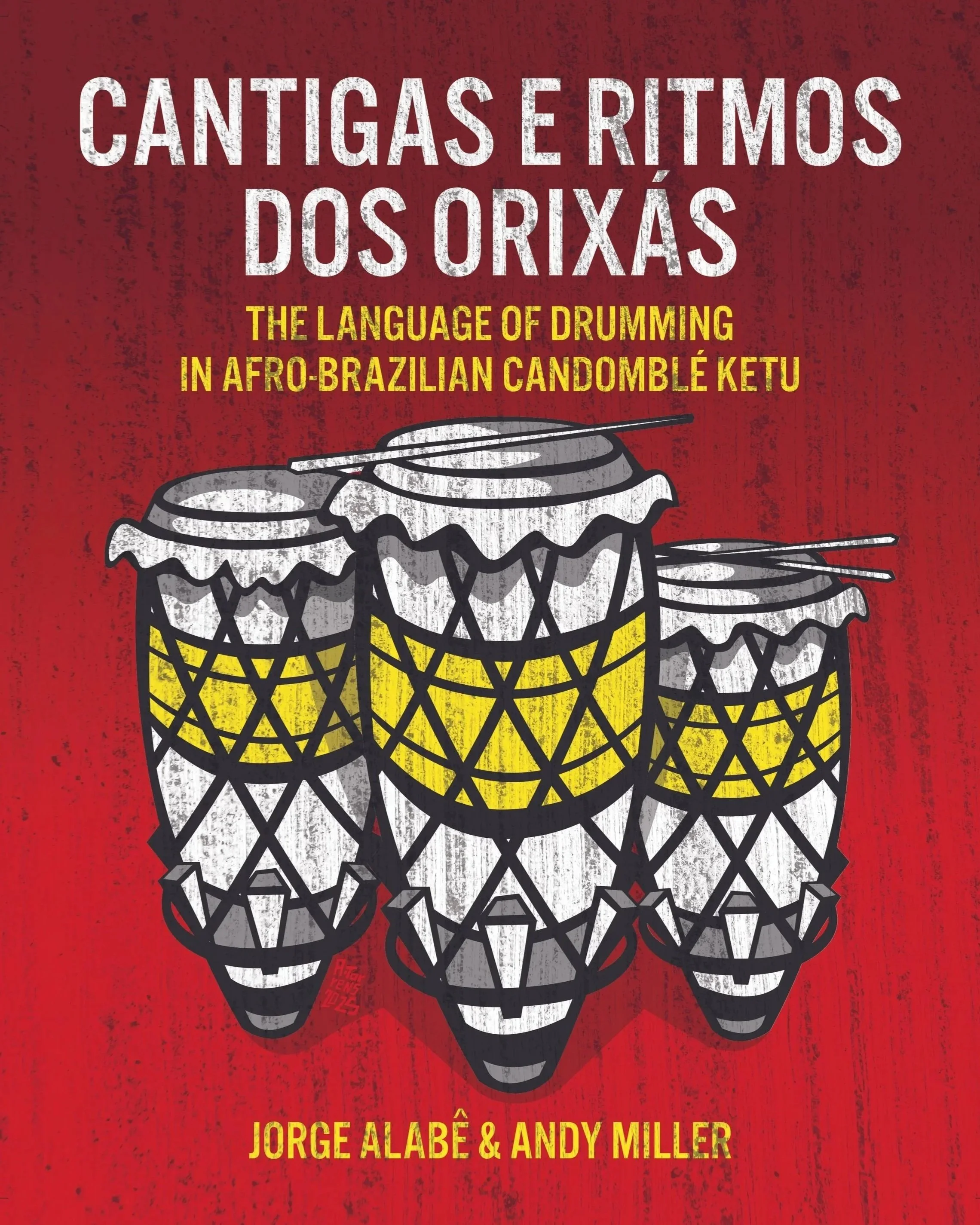
Cantigas e Ritmos dos Orixás: The Language of Drumming in Afro-Brazilian Candomblé Ketu is a thorough transcription and analysis of the performance of master Candomblé musician, Jorge Alabê as recorded on his album, Cantigas e Ritmos dos Orixás: The Music of Candomblé. This book combines transcription and musical analysis with ethnographic accounts of Jorge Alabê’s life in Candomblé to document how Candomblé Ketu was practiced at the turn of the 21st century in the lineage of Mãe Nitinha of the terreirors, Ilê Nossa Senhora das Candeias in Rio de Janeiro and Ilê Axé Iya Nasso Oka (Casa Branca) in Bahia, Brazil. The book is a practical guide for those wishing to learn how to play the drum rhythms and songs of Candomblé Ketu.

The nearly 170-page book presents the most thorough method book on Candomblé Ketu drumming available in English and is broken into five sections:
Part I: Overview of Candomblé. Including an ethnographic account of Jorge’s path to becoming an Ogan Alabê.
Part II: Pedagogy, Technique, and Notation. Including a methodology to learning the rhythms of Candomblé.
Part III: The Rhythms of Candomblé. Transcriptions of the ensemble parts and Jorge Alabê’s complete performance on the rum (lead drum) for each of the 11 rhythms on the Cantigas e Ritmos dos Orixás album.
Part IV: The Songs of Candomblé Ketu. Includes transcriptions of the songs recorded of the Cantigas dos Orixás album.
Part V: Dobrada – Playing with Dance. Highlights select phrase sequences in the rum that are played to accompany specific orixá dance movements.
Also included in the book are nine original and beautifully illustrated pieces of orixá art created by Beto Torrens.
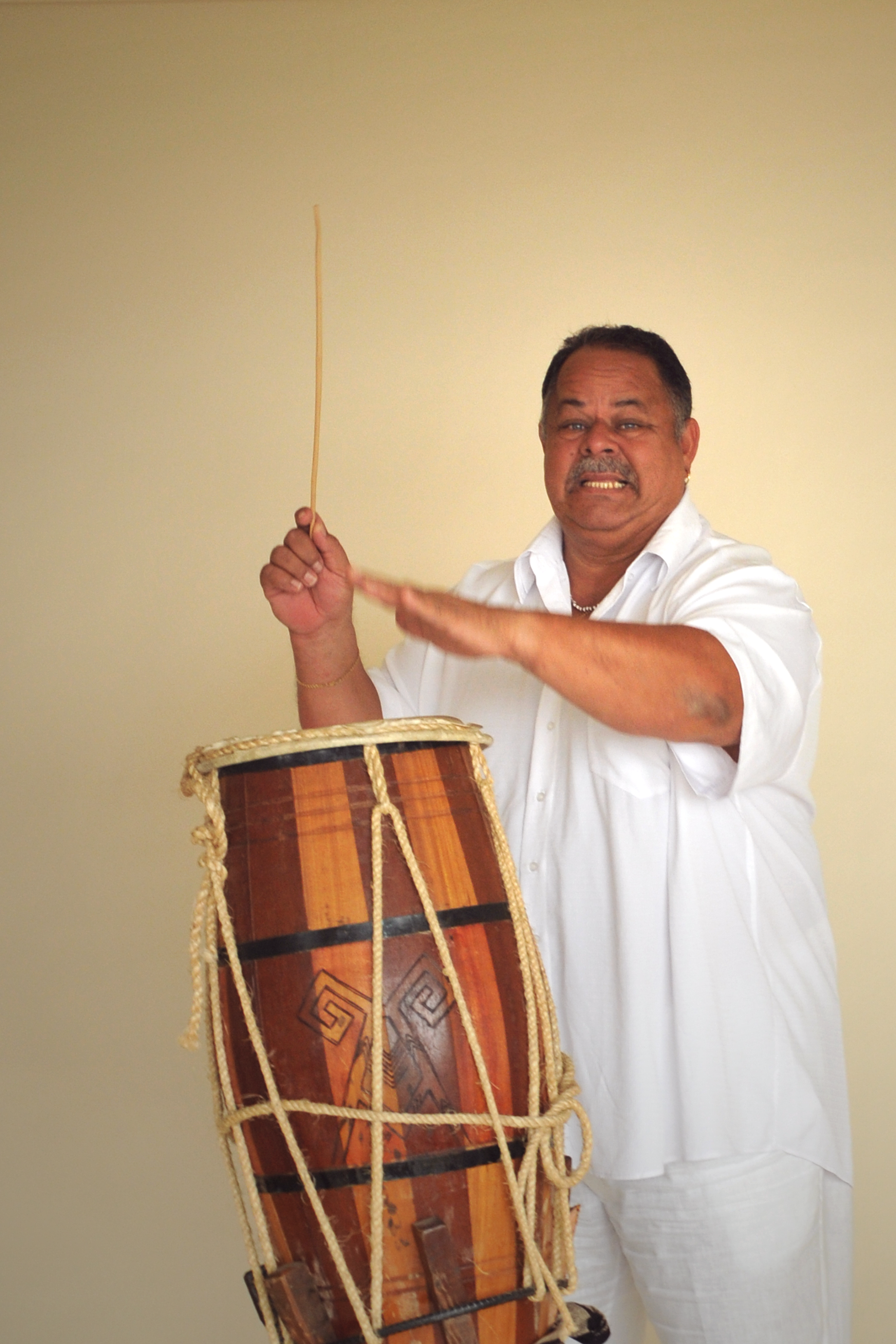
Brazilian master percussionist and teacher Jorge Alabê was born in Rio de Janeiro and grew up immersed in the rich musical culture of Brazil. He developed from a young age as a master drummer in the Afro-Brazilian tradition of Candomblé, and his title “Alabê” signifies the highest level of skill, deep knowledge, and authority in the rhythms, songs, and leading of rituals in Candomblé. Jorge also grew as a samba percussionist as a young man, playing with highest-level samba groups in Rio and achieving recognition as one of the top repinique players of his time. He served as rhythm director of the Minas Gerais Samba School in Belo Horizonte and participated in recordings with Milton Nascimento and Martinho da Vila.
Jorge became known internationally while he was percussion director and a featured performer with the legendary Brazilian performing group Oba Oba. During his 15 years with Oba Oba, he toured through Europe, Asia, and South America, as well as the United States. Jorge moved to the U.S. in 1996, first residing in New Orleans, where he mentored and performed with the cultural group Casa Samba. He has been teaching workshops in samba and folkloric percussion as well as Candomblé rhythm, song, and dance forms throughout the U.S. since then and has been an inspiration to numerous musicians and community groups across the country.
He moved to the San Francisco Bay Area in 2004, where he continues to perform, teach, and inspire students through the Candomblé community of Ẹgbẹ́ Ọmọ Alairá, as well as his samba group, Grupo Samba Rio. He was the samba director at California Brazil Camp for 15 years, starting with its inception in 1997, and continues to be a leading instructor and cultural icon at the camp. Jorge Alabê became well known to students of traditional music as a featured singer on the CD Bata-Ketu: A Musical Interplay of Cuba and Brazil, and has more recently released a recording of Candomblé music, Cantigas e Ritmos dos Orixas: The Music of Candomblé. More information about Jorge Alabê can be found on his website, jorgealabe.com.